
Bath Installation and Replacement in Milton Keynes
Tell Us About the Job
Tell us about the job in two minutes and we’ll come back to you with a clear, fixed price.
Replacing a bath sounds like the simplest job in a bathroom and it is the one most likely to produce a surprise. The bath itself is straightforward. The problems come from the things surrounding it: whether the waste can go where the new bath needs it, whether the floor will carry what you have chosen, and occasionally whether the bath will physically get into the room.
We install and replace baths across Milton Keynes and the surrounding towns, in homes, rental properties and commercial premises. Gas Safe registered, registration number 981362.
- Gas Safe registered 981362
- Fixed price agreed before we start
- Milton Keynes and 20 miles around
- 8am – 8pm, Mon to Sat
Last updated
The decisions that come before the bath
The waste route
A bath waste sits low, which means it has less room to achieve a fall than any other fitting in a bathroom. Move the bath along a wall and the waste usually follows without much trouble. Move it to the opposite side of the room and you may be into lifting flooring or into a boxed run that changes the look of the room.
Freestanding baths are the ones that catch people out, because the waste comes down in the middle of the floor rather than at the end against a wall. On an upper timber floor that means the waste has to run between joists to reach the stack, and the joists run whichever way they run.
Confirm the waste route before ordering. It is the constraint, and it does not negotiate.
Weight and the floor
A standard acrylic bath full of water is heavy. A cast iron freestanding bath, full, with somebody in it, is a concentrated load in the middle of a floor rather than spread along a wall.
On a ground floor slab this is a non-issue. On a timber upper floor it is worth checking, particularly in older property and particularly for cast iron or stone resin baths. This is not a reason to avoid a freestanding bath. It is a reason to establish it before the bath arrives rather than after.
Tap type and water pressure
Bath taps have a minimum operating pressure like any other tap, and if you are on a gravity system with a cylinder and a loft tank, you have low pressure. Fitting high pressure taps to a gravity system produces a bath that takes a very long time to fill on the hot side.
Freestanding baths add a further wrinkle, because floor-standing bath fillers and freestanding bath shower mixers frequently have higher pressure requirements than wall or rim mounted taps.
Check the specification against your system before buying, or send it to us and we will check it.
Getting it into the room
Worth a sentence because it happens. Large freestanding baths and some shower baths do not fit through standard door openings or up narrow stairs, particularly in 1970s properties with tight stairwells. Measure the route, not just the room.
Types, and what each means in practice
Standard rectangular baths.
Acrylic is light, warm to the touch, easy to handle and the standard choice. Steel is more rigid and more durable, feels colder to sit in initially, and is heavier. Both are fine. Acrylic quality varies considerably, and a reinforced acrylic bath is worth having over a thin one that flexes underfoot.
Shower baths.
P-shaped or L-shaped, wider at one end so you can stand under a shower. A sensible answer for a single-bathroom household that wants both. Note that the screen and the seal detail matter more than the bath, and that is where leaks start.
Freestanding baths.
The waste route and the floor loading are the two considerations. Also worth knowing that cleaning around and behind one is a job you will be doing, and that they lose heat faster than a panelled bath boxed into a wall.
Walk-in baths.
For accessibility. They fill and drain with the user inside, so drain speed matters more than usual, and that means the waste route needs to be good rather than adequate.
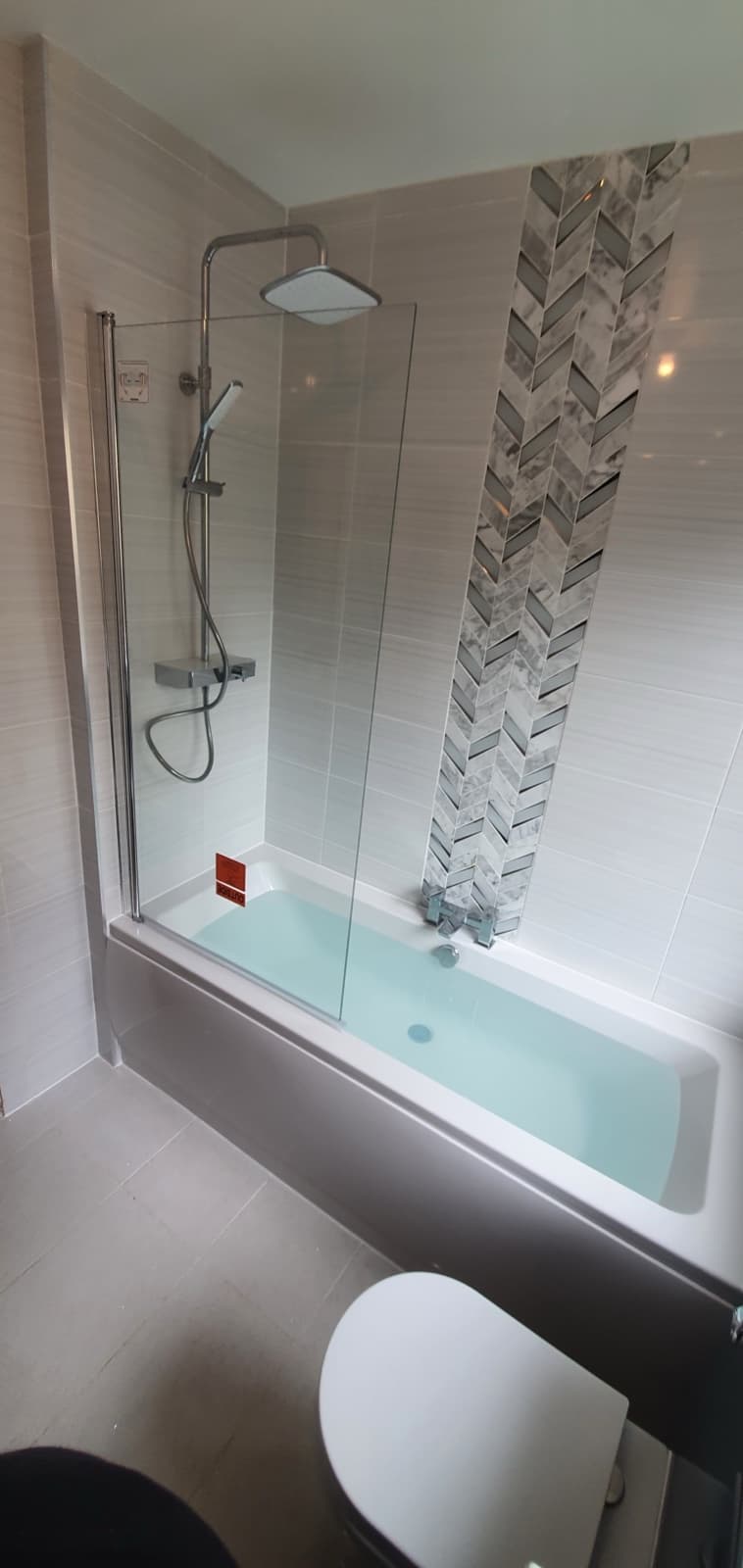
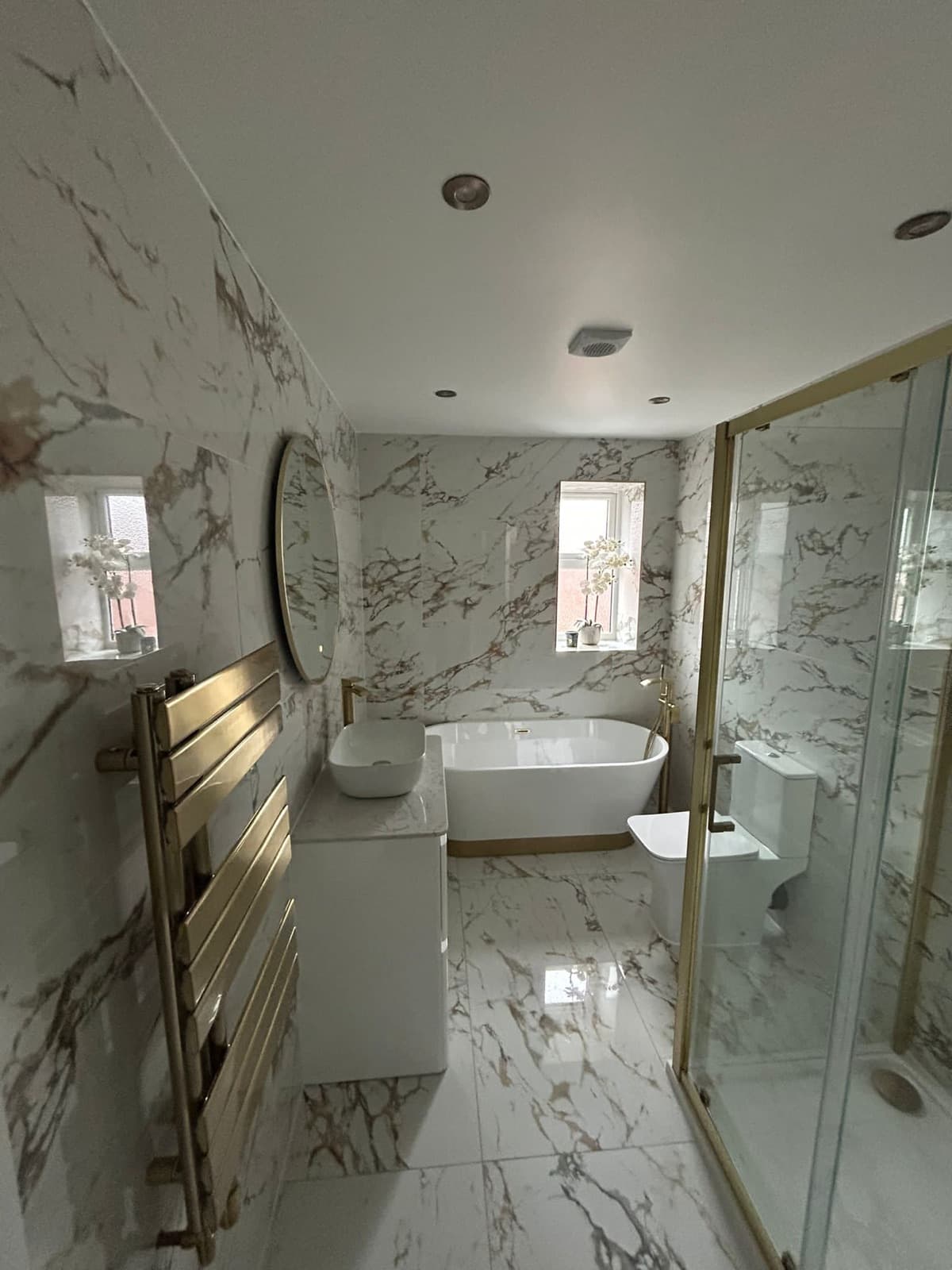
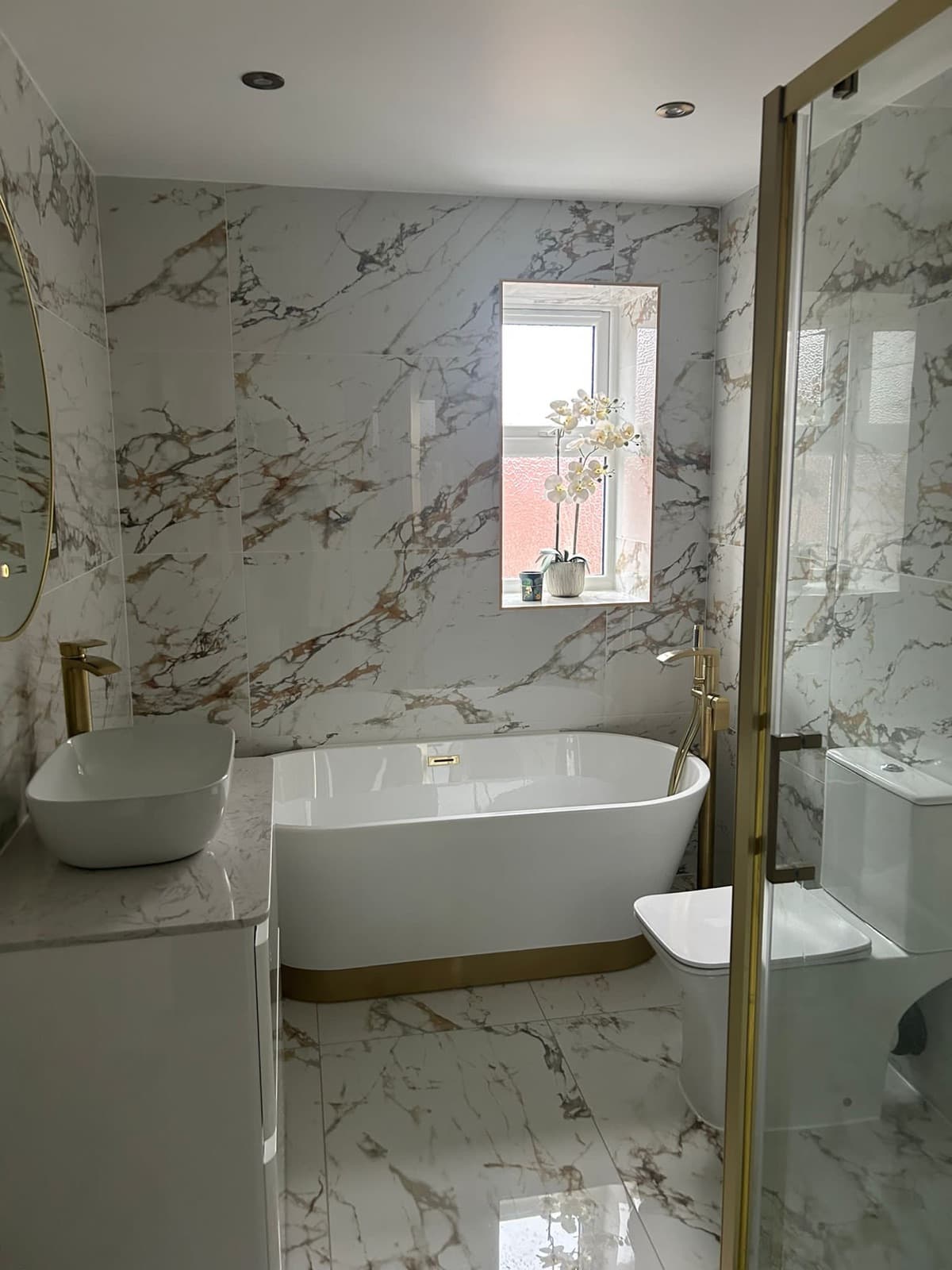
Replacing like for like, or changing the layout
Like for like
is straightforward. Same footprint, same waste position, usually a day’s work including making good the connections and the seal.
Changing size or position
means the waste route gets looked at first, and possibly the hot and cold supplies too. Not difficult, just not a same-day job, and worth pricing accordingly.
Bath out, shower in
is a common decision, particularly in second bathrooms and in properties being prepared for rental. The waste position for a shower tray is different from a bath, and the floor level may change. Our shower installation page and wet room page cover the alternatives.
What we do, and what we don’t
We do the plumbing: waste, supplies, taps, the bath installation itself and the connections. We do not tile, plaster or decorate. Most people have a tiler already or a builder bringing the trades, and we work alongside them on the sequence set out on our bathroom plumbing page.
The one detail worth coordinating: on a panelled bath, the seal between the bath edge and the tiling is where leaks begin, and it works best when the bath is installed, filled and left full while the tiling and sealing happen, so the bath is sitting at its loaded position rather than rising afterwards and breaking the seal.
Baths in Milton Keynes: the local picture
1970s estates, Beanhill, Coffee Hall, Netherfield, Fishermead and Conniburrow. Compact bathrooms with the bath in a fixed position, tight access up stairwells, and small bore pipework. Shower baths are frequently the best use of the space available.
1980s and 1990s estates, Furzton, Emerson Valley, Shenley Brook End and Loughton. Often still gravity fed, so bath tap pressure requirements need checking, and a bath that fills slowly on the hot side is usually the system rather than the tap.
Newer estates, Brooklands, Whitehouse, Fairfields, Oakgrove, Tattenhoe Park and Glebe Farm. Mains pressure throughout, so tap choice is unconstrained. Ground floor underfloor heating in screed matters if any floor penetration is needed for a freestanding waste.
Older property in Stony Stratford, Newport Pagnell, Olney and Wolverton. Solid floors on the ground floor, older timber above, and stack positions that were fixed a long time ago.
Hard water everywhere. At around 300 mg/l across the city, roughly 317 in MK8 against a UK average of 207, bath taps and shower mixers scale like everything else here.
Before you order a bath
- Confirm the waste route, especially for a freestanding bath
- Check the floor construction and loading if it is upstairs or cast iron
- Check the tap pressure requirement against your water system
- Measure the route into the room, not just the room
- Decide the tap position, rim, wall or floor, before ordering the bath
- For a shower bath, plan the screen and the seal detail
- Confirm who is tiling and agree the sequence
- Ask for the bath to be filled before sealing, so the seal holds
Frequently asked questions
Can you move my bath to the other side of the room?
Depends on the waste route and whether a fall can be achieved. Worth checking before you commit to a layout.
Can I have a freestanding bath upstairs?
Usually yes. The floor loading and the waste route both need establishing first, particularly for cast iron or stone resin.
Why does my bath fill slowly on the hot side?
Most often low pressure from a gravity hot water system feeding taps designed for higher pressure. Sometimes a partially blocked supply or a failing isolating valve.
Acrylic or steel?
Both work. Acrylic is lighter, warmer to sit in and easier to handle. Steel is more rigid and more durable. A good reinforced acrylic bath is better than a thin one regardless of material preference.
Can you fit a bath I have bought myself?
Yes. Send us the specification first if you can, particularly the tap pressure requirement and the waste position.
How long does a bath replacement take?
Like for like, usually a day for the plumbing. Changing size or position takes longer because the waste and supplies move with it.
Do you remove the old bath?
Yes, and we will tell you at quote stage how it is going out, which matters for cast iron on an upper floor.
Do you fit baths in rental properties?
Yes. Reinforced acrylic and a well-executed seal are worth specifying in a rental, since both reduce future callouts.
You may also need
Get the waste route checked first
Call 07514 312117 or send a WhatsApp with a photo of the bathroom and the bath you are considering. Gas Safe registered 981362, CIPHE member, fully insured.